What sets relief art apart
Most wall art gives a modern interior a rectangle of colour. Relief art, in contrast, gives it depth, shadow and a surface that changes through the day. I think it creates drama without adding a single object to the floor.

FLAT ART
A modern interior is already a study in planes and light. Flat art fights that.
I love minimalist interiors. They work because of geometry and the way light and shadow play across a surface. I think a flat canvas, sealed behind glass, reading exactly the same at 8am as it does at 8pm takes away from that. It fills the wall without being in the room.
Sculpture solves that. But it's demanding. It needs floor space, a plinth, a surface which often leads to more stuff. That's often a lot for a client.
Relief art sits in between. The presence of sculpture, in the footprint of a painting.
ART IS
A painted surface that leaves the wall.
Each Altūm piece is a faceted panel. Engineered geometry, precision-printed and milled, then hand-painted facet by facet. The composition rises up to 150mm off the canvas base. Every facet meets its neighbours at a different angle, so a single colour is different for everyone looking at it, and different depending on when you look. That's what fascinated me about this art. We all see something different.
The same wall, two depths.
A canvas presents one plane to the room. A relief does a lot more for the room with light and shadow.
WITH THE LIGHT
One piece, read three ways before dinner.
Because the surface is three-dimensional, the artwork is finished by whatever light the room has. Morning light rakes across it and the facets throw long shadows. Midday flattens them. In the evening, warm downlights pick out the ridges and the piece reads darker and heavier. Clients notice this in week one, and keep noticing it.
For a specifier it means the artwork earns a lighting decision. A single wall-washer or a track head at 30° will add to the drama as much as any frame.
Long shadows. Maximum contrast between facets, the geometry at its sharpest.
Shadows collapse. Colour dominates and the surface reads closer to painting.
Ridges catch, valleys drop away. The piece reads heavier, closer to sculpture.
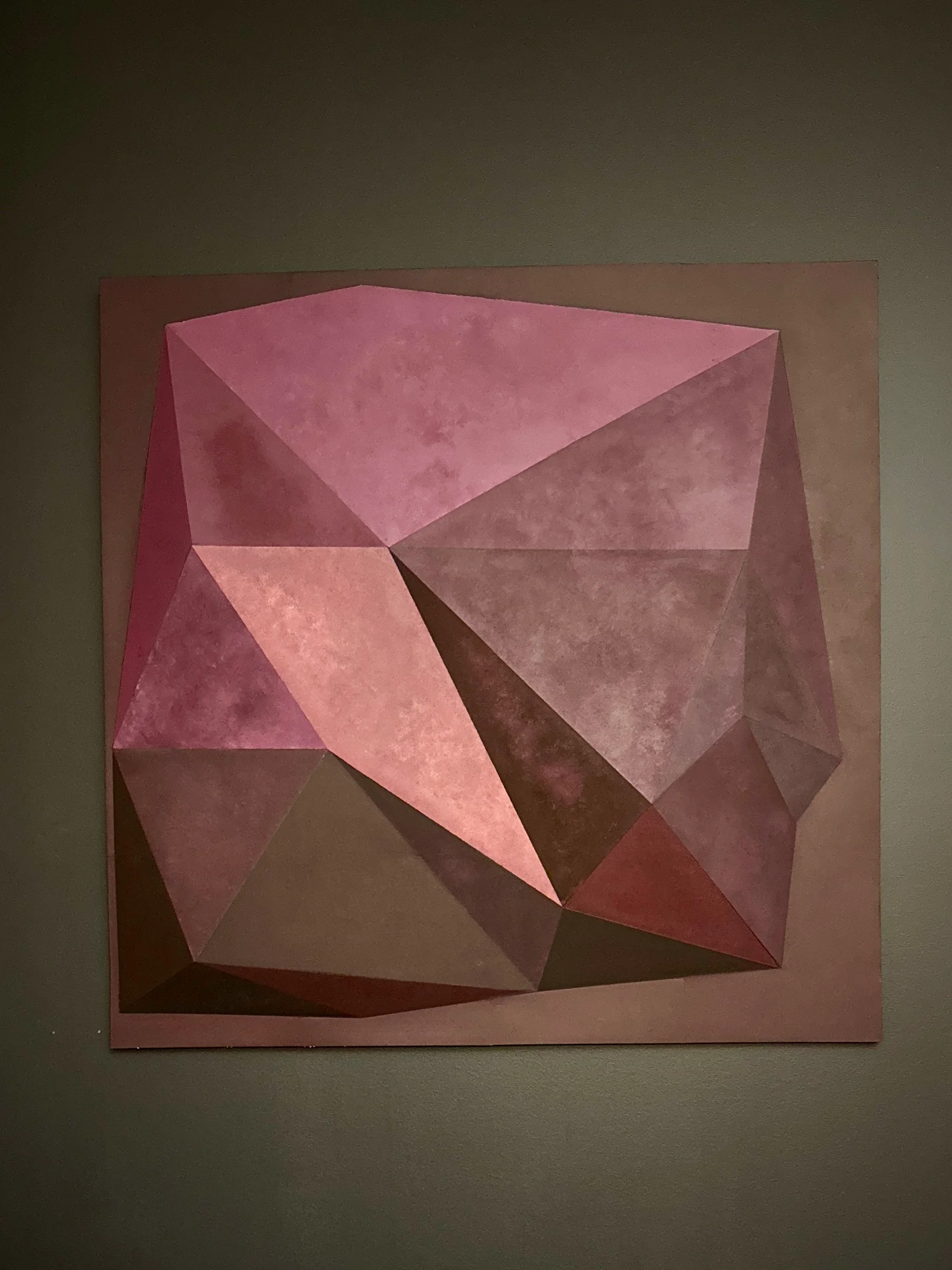
The work is unique twice over: the painting is one of a kind, and so is the sculpture beneath it.
TWICE OVER
Engineered, then made by hand.
The geometry is designed digitally and produced on custom technology built by the studio, so the form is precise. Everything after that is hand work: painted, facet by facet, in the order the light will hit them.
No two works share the same three-dimensional form. A client is not buying an edition. Each piece comes with a certificate containing the fingerprint of their design. For a designer, that removes the risk of a signature piece being copied. It is as unique as they come.
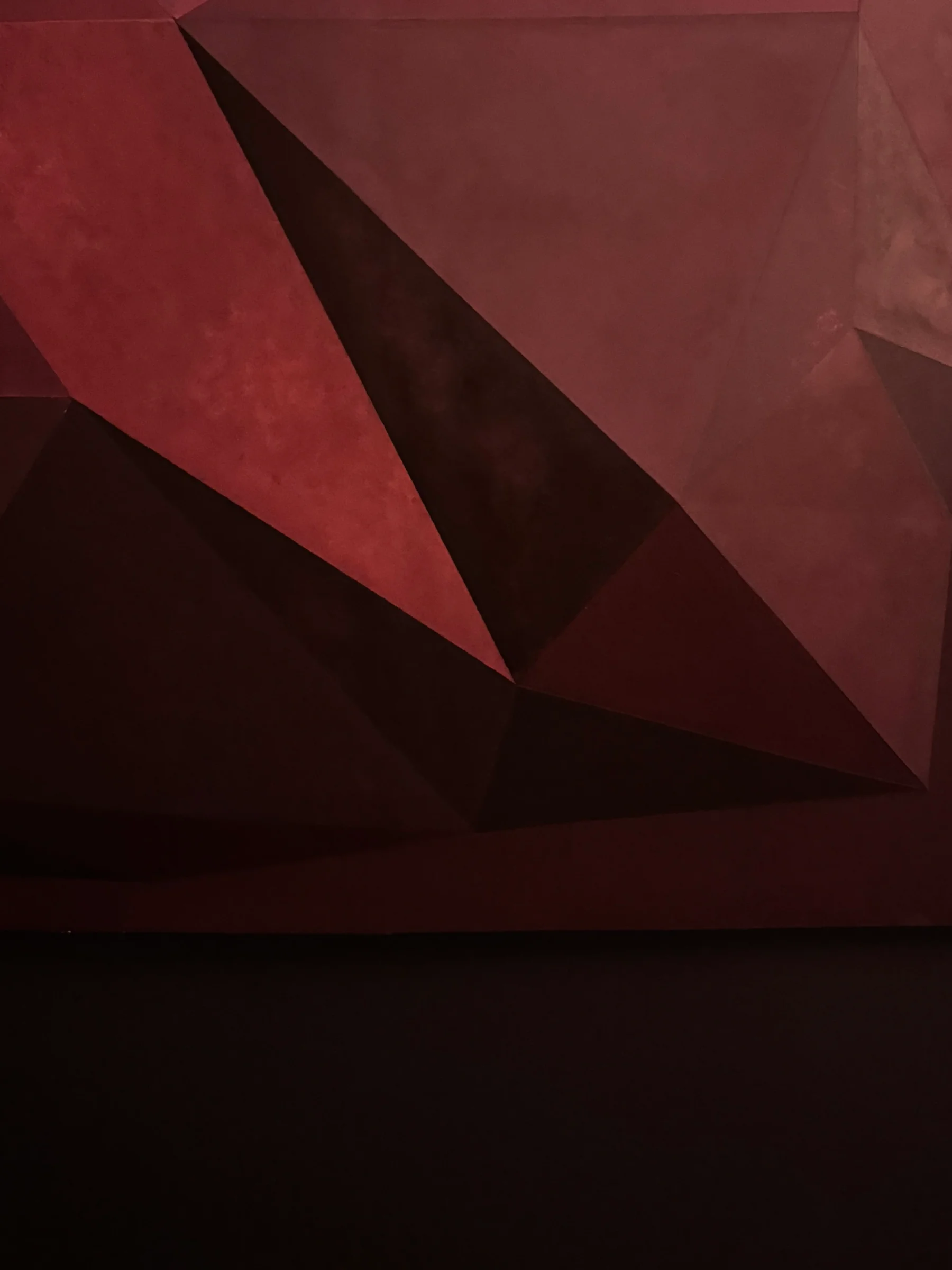
The practical part.
Commission lead times run 3–5 weeks depending on scale. Colour approval is by painted facet sample before production begins.
See it in person before you specify it.
Relief art can't be shown in photographs. Visit the Melbourne Studio or we can come to you in person.